|
Back then in April
 In
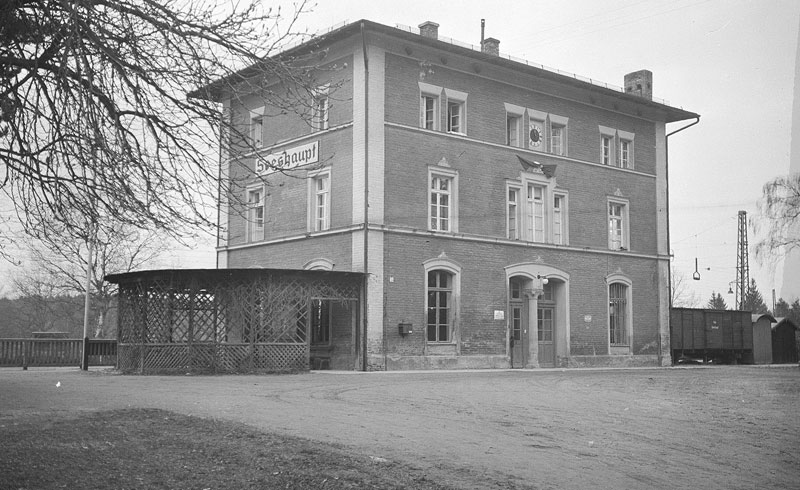
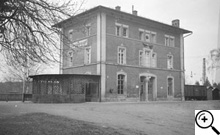
the morning hours of April 30th, 1945, a freight train stranded at the
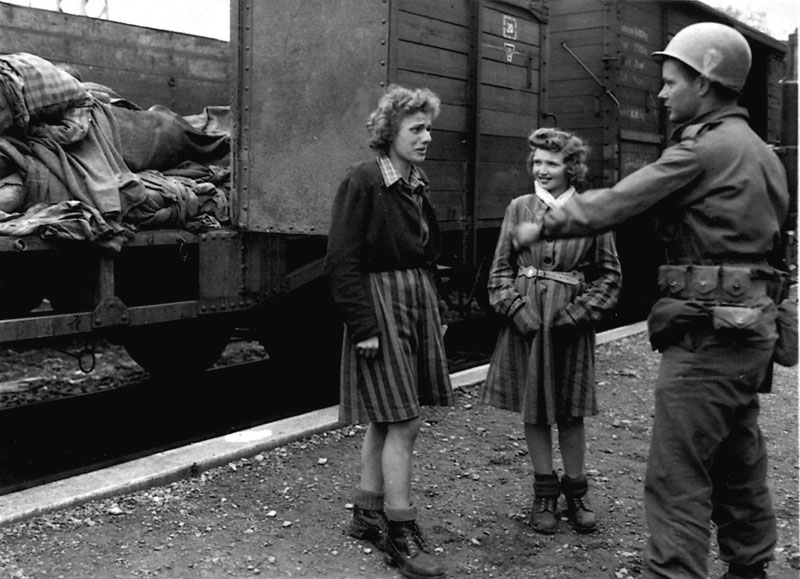
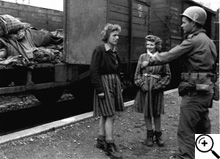
station of Seeshaupt. Later on, US-soldiers, which marched at the village,
freed the prisoners from the wagons. 68 of them died on the ride from
Mettenheim station.
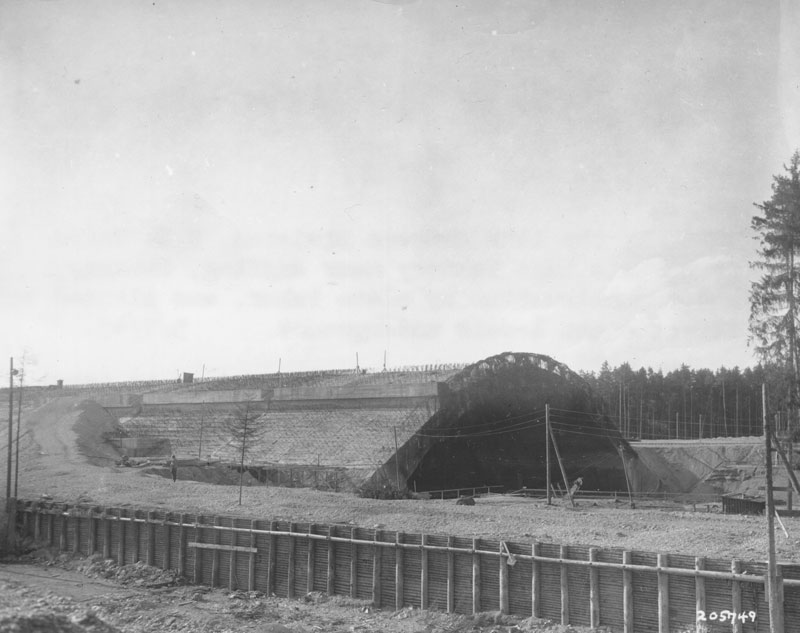
The prisoners came from a sub camp from the KZ
of Dachau, Mühldorfer Hart. At a construction site was planned, that a
half-underground armour bunker should be built to produce the jet Me 262.
On April 25th, 1945, the camp was quickly evacuated because of the fear of
the US-Army. The sick people were left behind. The guards loaded about
3600 prisoners at the station of Mettenheim in a freight train. 80 to 90
people per wagon. In the late evening, a train with 50 wagons left the
station to go to Dachau. In the next morning, low-flyer attacked the train
for the first time. A day after, the train stopped in Poing, the
locomotive was broken. In the evening the rumour said, the war is over.
Some of the guards from the train fled. Soon after, some prisoners left
the train but were driven back from the SS. The massacre of Poing started,
with 50 dead and over two hundred wounded.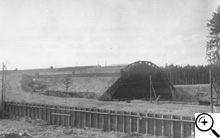
The train headed to Munich and was divided at
the Isartalstation. Both trains were directed to Bichl-Kochel. In
Beuerberg, American low-fighters fired at the train, again, not knowing,
KZ-prisoners were inside. 20 dead people were to complain. After one of
the locomotive was destroyed, both trains are coupled and headed again to
Bichl and Kochel. In the morning of April 30, 1945, the board of Director
from the station, also the mayor of Kochel, steered the train in direction
to Starnberg. A part of the train were disconnected in Tutzing, near the
“Bavarian textile factory”. The other one in the station of Seeshaupt. The
Americans freed about 1600 people in Tutzing, in Seeshaupt quite 2000 –
after 5 days of wandering.
Face of horror
 The
sight of the prisoners must be horrible. One of the Americans testified
that he never in his live saw such a terrible thing – even though as a
soldier he saw many things. Many of the prisoners have been underfed; lot
of them had deceases of Typhus and Tuberculosis. Other are wounded badly,
because of the air raids and the massacre of Poing. The US-troops forced
the mayor, community councils and from every household one citizen, to go
to the station and see the train, the murgeled bodies, the dead and the
emaciated people.
After this, the wounded and sick people were brought to
hospitals. Most of them came to „Lazarett 2003“at the Lido hotel in
Seeshaupt. 28 of them died there. Private houses and official
 buildings
were confiscated from the Americans to accommodate the capable. 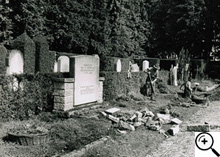 They even
tolerated the looting through the KZ-prisoners. About two or three weeks
later, the American commander took the later prisoners to a location for
„Displaces persons“(DP) in Feldafing and Freimann.
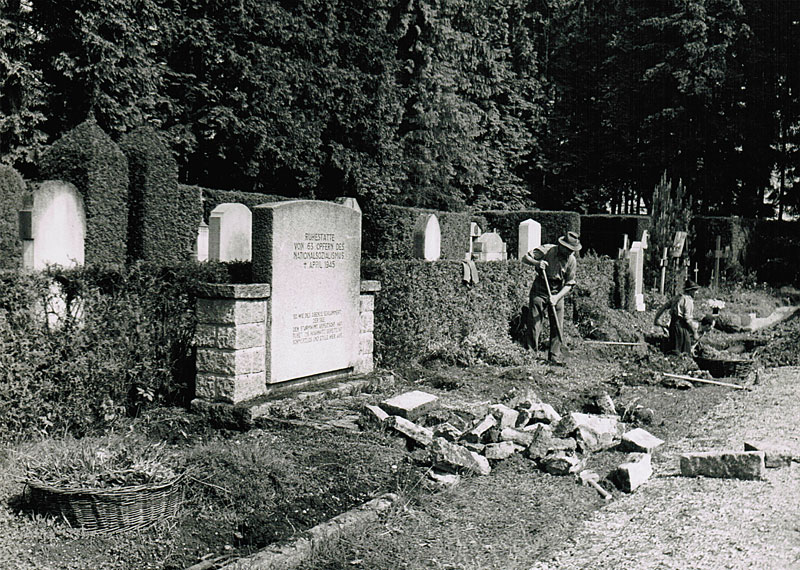
The unknown dead from the KZ-train, 63 or 68,
where buried at the cementary in Seeshaupt. 1956 they were exhuminated and
transferred to Dachau. The deceased from the Lido-Lazarett where
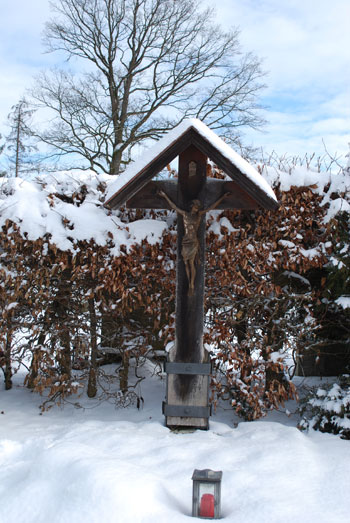
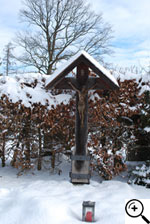
exhuminated in 1955. At the mass grave in the cementary is a mark – a
silent cross out of wood. No inscription.
Memory and discussion
 For
decades, no one spoke about the cruelty, about the mergeled people, which
came to the village. No one spoke about the expulsion of the residents to
make space for the prisoners and the bad time of the plunder. However,
like in many places, there was a rethink. The personal experiences faded
because nothing compared to the inhuman domination of violence of the
Nationalsozialismus and the unimaginable sorry of the people in the
concentration camps compared. 1985, the doctor and municipal count, Uwe
Hausmann, stimulate to remember with a memorial to the happening on April
30, 1945. It lasted about 10 years for the line-up. A heated discussion
between the advocates an opponent started up in Seeshaupt.
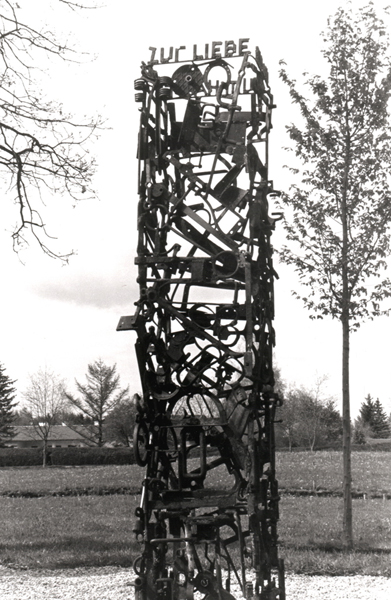
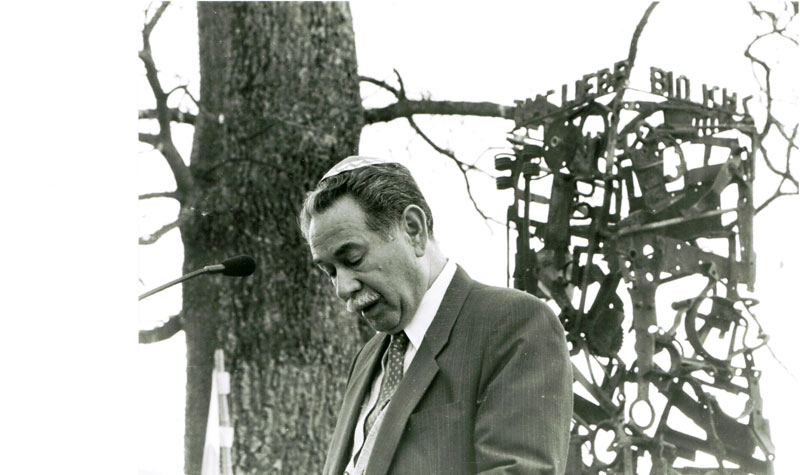
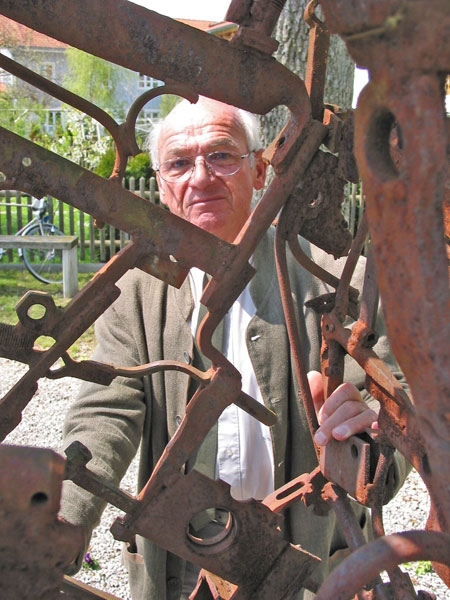
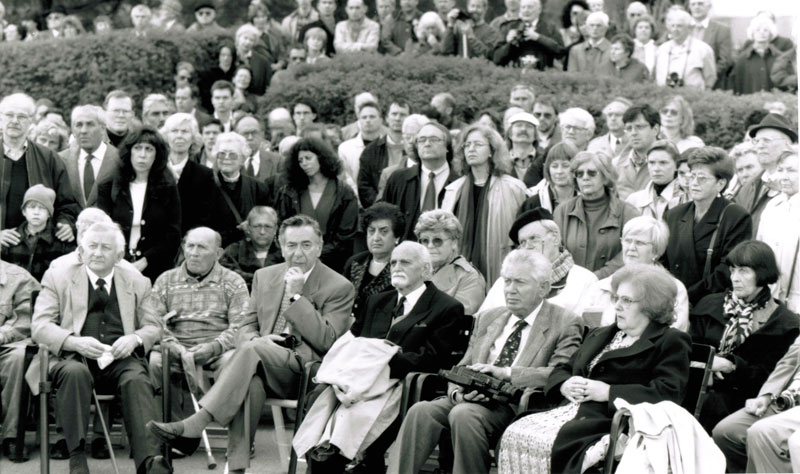
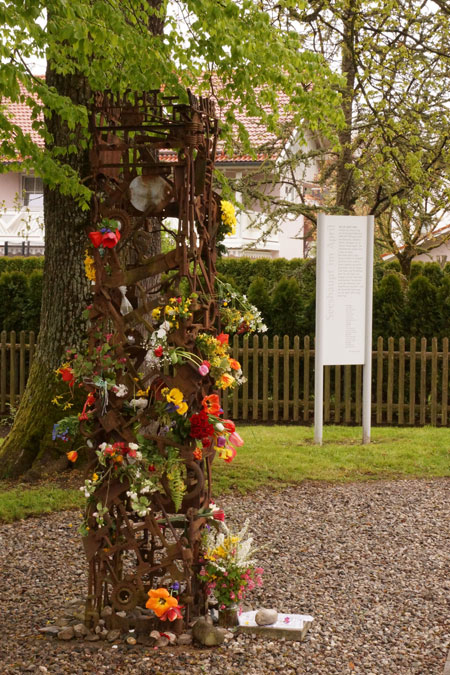
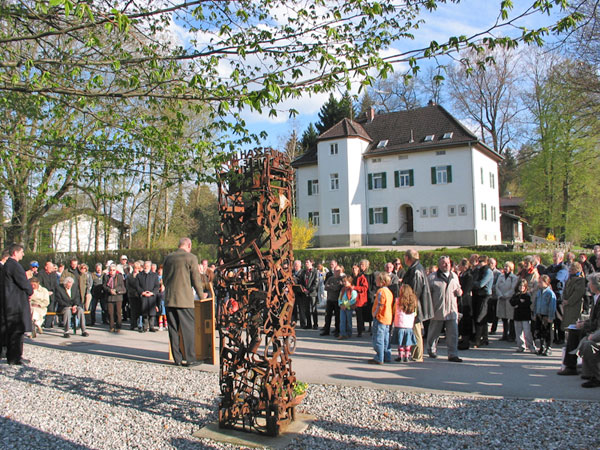
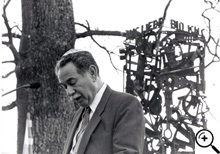
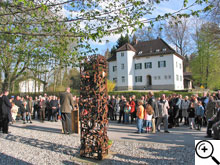
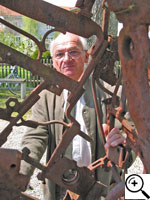 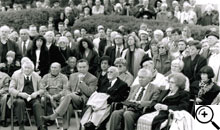 At the 50th anniversary, April 30, 1995, the iron-plastic, design by the
Artist Jörg Kicherer, was revealed. The monument is crowned by the words
from the Antigone of Sophokles: “Not for hate, for love I be”. Pastor
Heggenstaller appreciates the design in an impressive Mediation. “I see a
memorial to be here for thinking – everyone should think about it for
himself, what incident from back then has to admonish us today!”
Peter
Westebbe from Seeshaupt, caused, initiated an article in the Los Angeles
times that many of the survivors of the KZ-train – from the USA and Israel
- took part at the revelation.
|
| |
The second place of birth from Louis
Sneh
|
| |
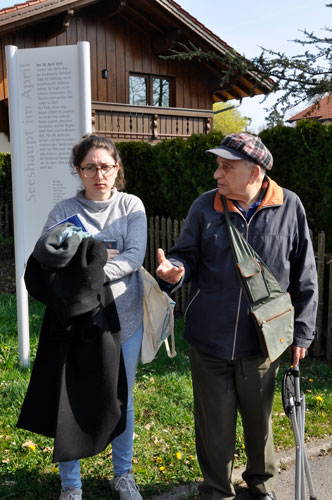
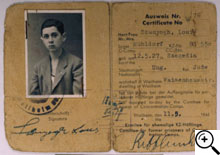 One
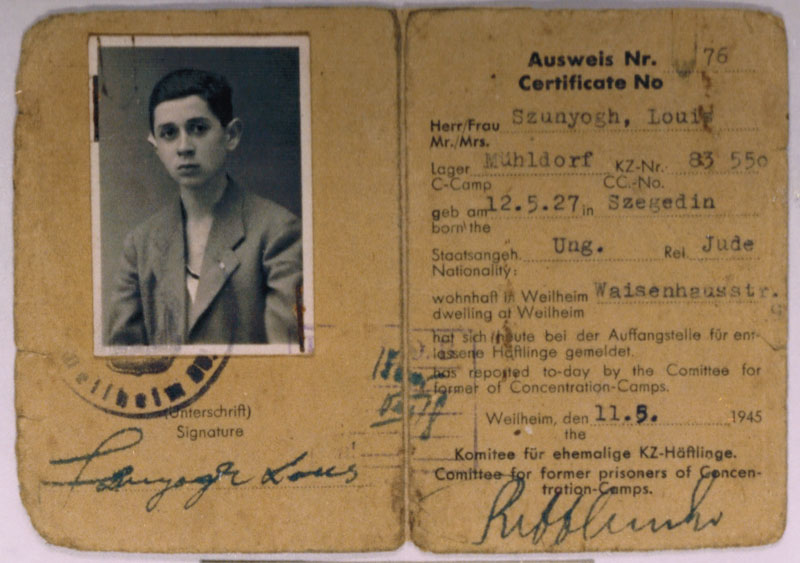
of the survivors of the KZ-train was Louis Sneh. Born as Jewish
Luis Szunyogh in Szegedin, Hungary, lives today in Los Angeles. He
is a successful businessman and Seeshaupt is his very special
second place of birth. In 1994, it was a happy coincidence, that
he mets the people of the initiative of Dr. Hausmann.
In
1945 while his liberation, Louis Sneh was 17 years old. His
carefree youth ended with the invasion German Soldiers in Hungary
in March 1944. In the middle of April, the ghettoization of the
Jewish population began and a couple of days later the
transportation to KZ Auschwitz started. For some days, Louis Sneh
and his mother has been in the freight train on the way. Penned up
with fellow sufferers, no water, no bread, no toilets – and the
uncertainty what will 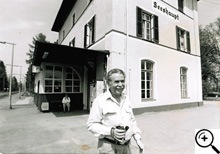 happen.
They stood at the death ramp of Auschwitz on June 29, 1944, in
front of the KZ-doctor, Dr. Mengele. Louis Sneh was sent to the
working camp Birkenau, he saw his parents never again. Four weeks
later, he came with the Tattoo-number 83500 to the KZ-camp
Mühldorfer Hart. After nine long month, the allied troops came
closer, the camp was cleared. On April 25, 1945, the guard
squeezed Louis Sneh together with 3600 prisoners in a train.
Again, he did not know, why and where to go. Five days later,
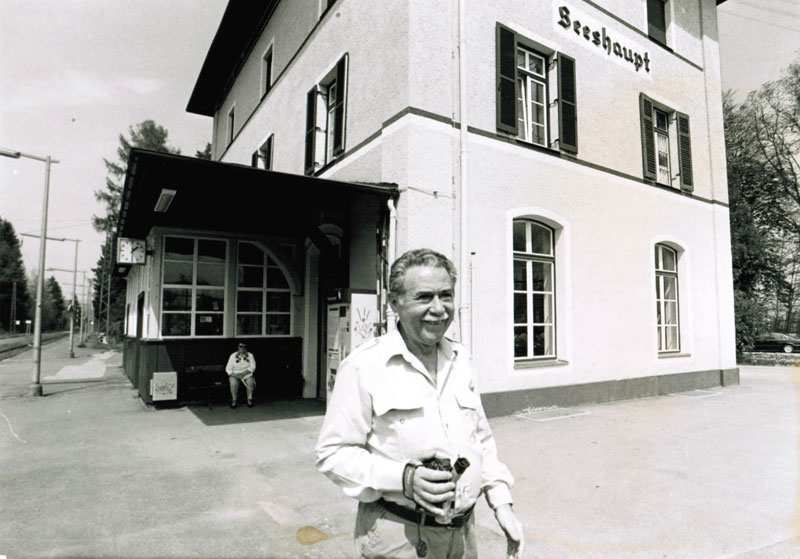
US-troops opened the doors, finally he was free! And the sign of
the Seeshaupt station he burned in his brain.
|
| |
The monument belongs to the
village
|
|
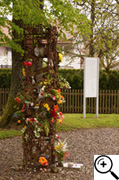 In
1995, the village stood because of the monument shortly for an
ordeal, no one 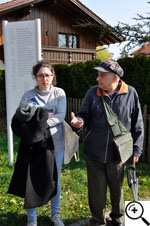 believes this today. Opposite the people of Seeshaupt are proud of
the courage dealing with the past. This happened earlier as some
other commune did. The memorial belongs to the village like the
yearly celebration under the name “Seeshaupt im April” stands.
Famous speaker came to the small village of Seeshaupt like
Hans-Jochen Vogel, Max Mannheimer, Theo Waigel, Kurt Kister,
Christian Ude, Franziska Augstein and many more.
The monument and its historical background are an inherent part in
the curriculum at the primary school in Seeshaupt. Children
decorate it every year on April 30 with flowers. High school
students from many schools are treated the monument, the incident
of April 30th, 1945 and the history of Seeshaupt in a skilled
work. Moreover, from time to time many aged survivors from the
KZ-train are visiting the place. It is a deep pleasure that
Seeshaupt remembers their story.
|
| |
 |
| |
Seeshaupt in April
|
| |
 The
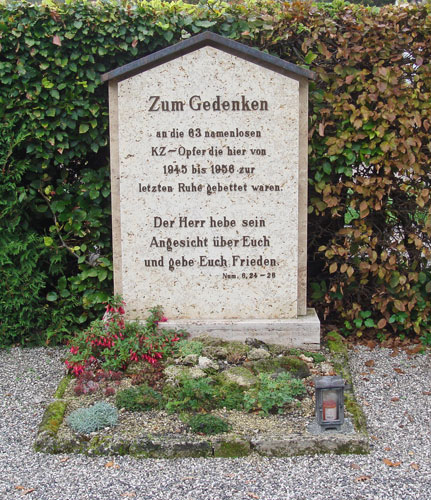
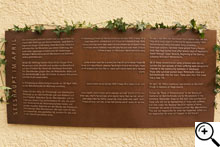
memory is not limited to the memorial. The wooden cross at the 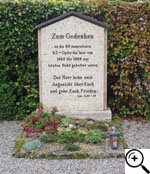 cemetery
was replaced in 2013 with a simple gravestone. The impressive
design for a sculpture “empty dig” from the Jewish Artist Marlies
Ploss and Blanka Wilchfort could not force. Although a bronze
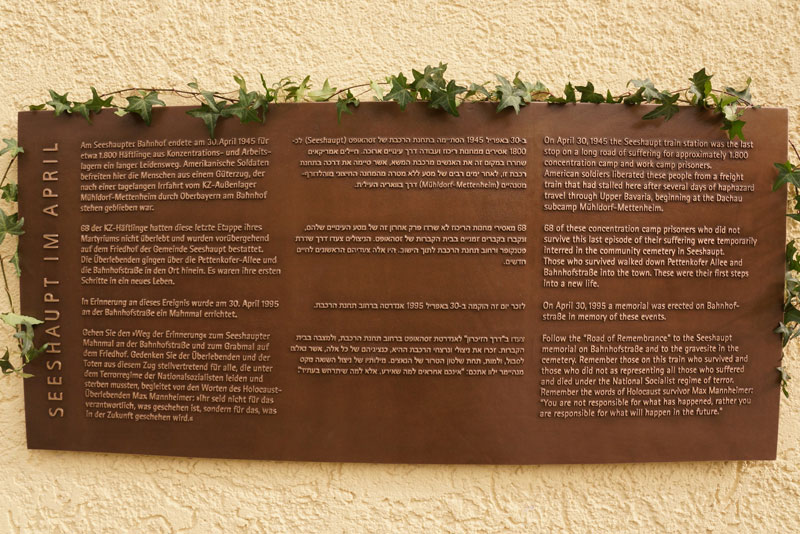
panel at the Seeshaupt station remembers in German, English and
Hebrew.
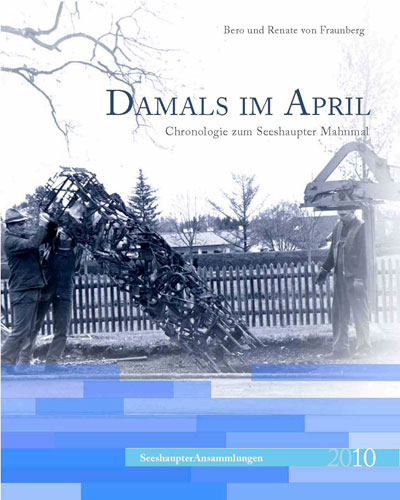
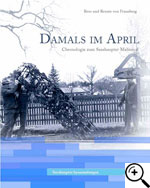
For the book-series
“Seeshaupter accumulation”, Renate and Bero von Fraunberg wrote
the book “Seeshaupt in April” in 2010. The same year Walter
Steffen documented the movie “Final destination Seeshaupt” which
had its first run. Two years later, the movie “The death train”
from Beatrice Sonhüter was shown.
|
| |
Renate von Fraunberg, April 2020 (Übersetzung:
Christina Christoph, Gemeinde Seeshaupt) |
|